





Alberta Net Billing:
Get Paid for the Solar You Generate

Alberta's micro-generation regulation lets grid-connected solar owners export surplus electricity and receive retail-rate credits on their bill. It's one of the most valuable solar incentives in Canada.

What Is Net Billing in Alberta?

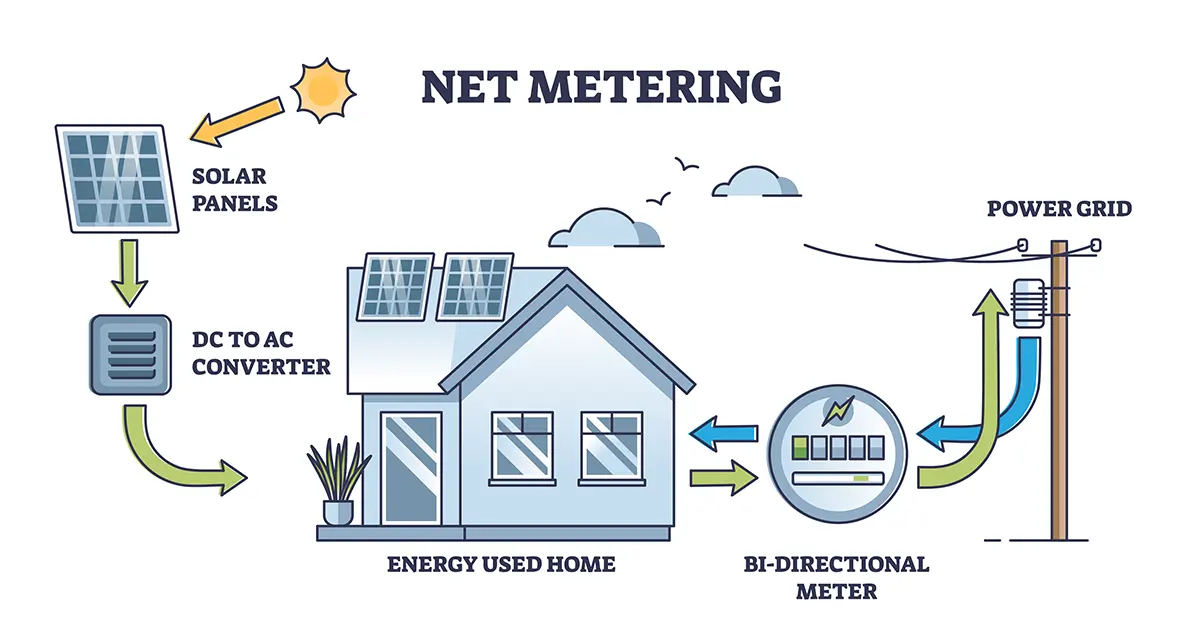
When your solar panels produce more electricity than your home is using at that moment, the surplus flows out to the Alberta grid. Under the province's Micro-Generation Regulation (AR 27/2008), your utility must credit that export at the same retail rate you pay for power you draw from the grid.

This is a meaningful distinction from older net metering models in other provinces, where exports are credited at a lower wholesale rate. In Alberta, you export at retail and import at retail. A kilowatt-hour exported has the same dollar value as a kilowatt-hour consumed.

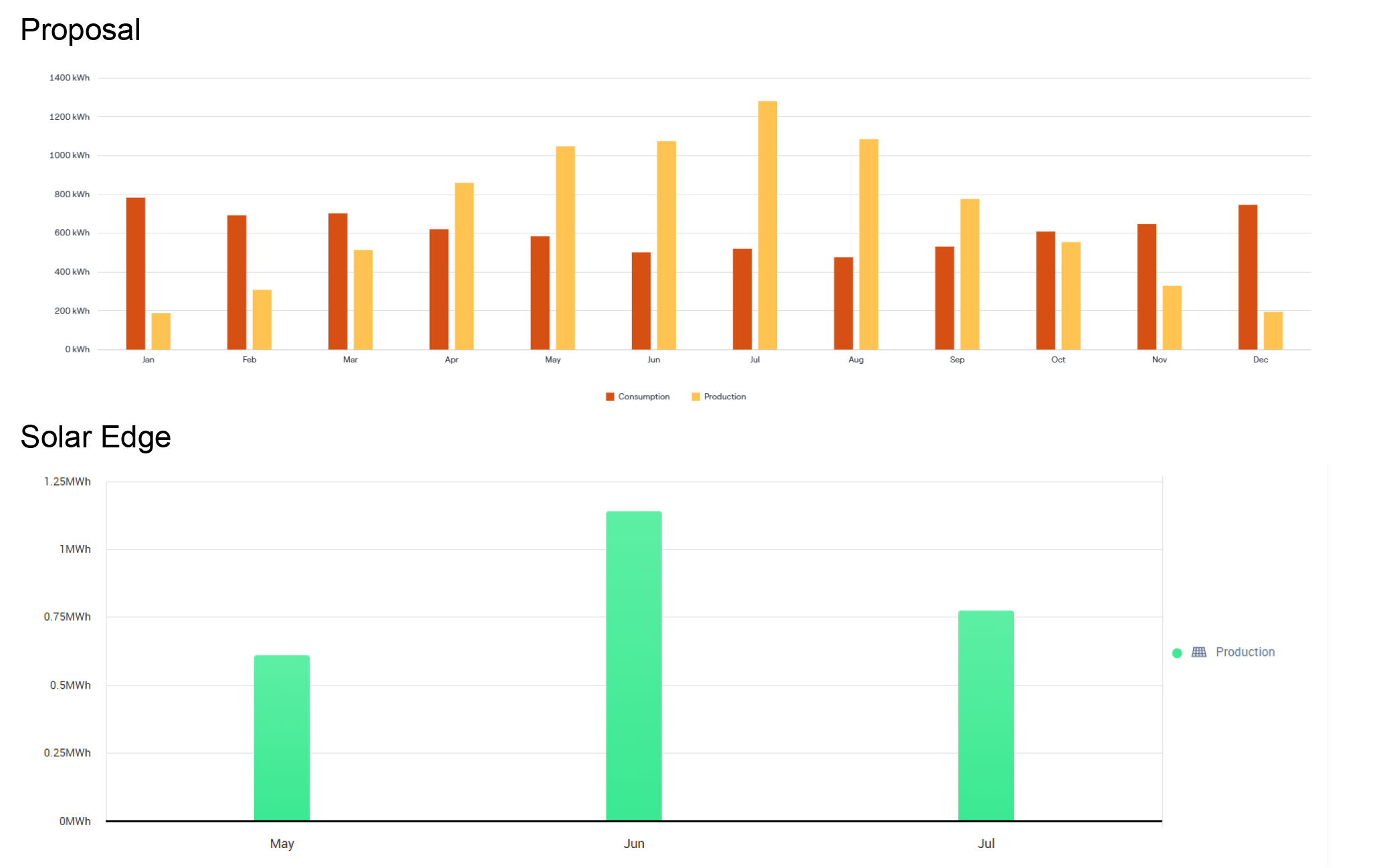
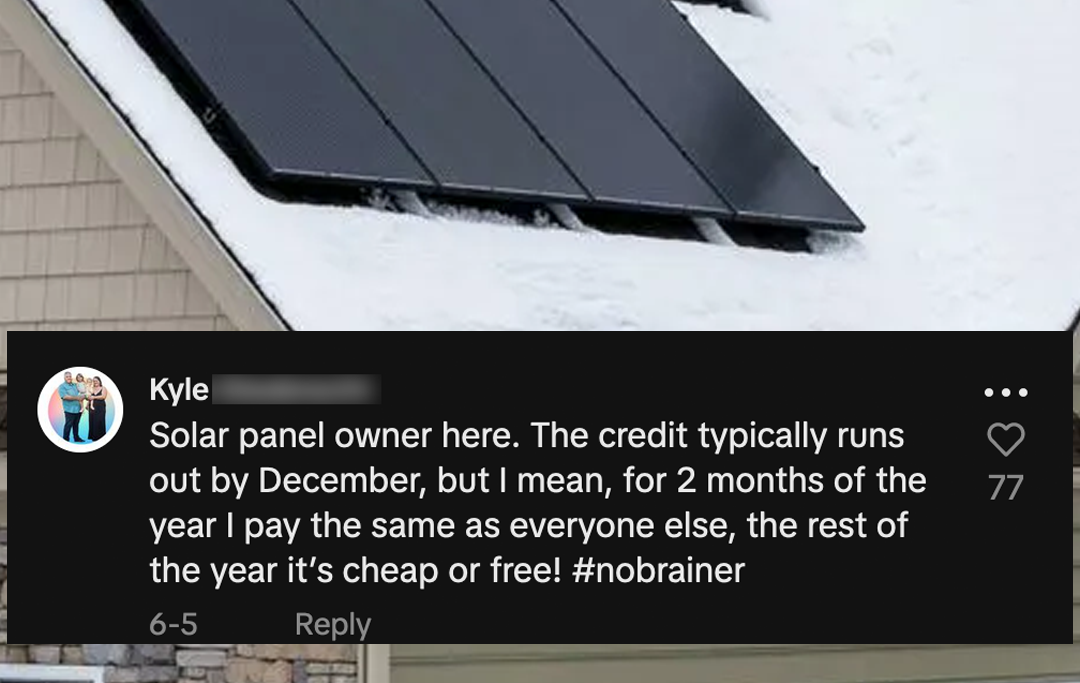
Key rule: Unused credits roll forward month-to-month for up to 12 months, then reset to zero. The strategy is to generate large surpluses in the high-sun summer months and draw those credits down through the lower-production winter months.

Alberta's all-in electricity rate sits around 18 cents per kWh when you factor in distribution, transmission, admin fees, and local access fees. That's the rate your credits are valued at. A typical 8 kW system producing 10,200 kWh per year, with roughly 40% exported, generates credits worth over $730 annually from export alone.

How the Credit System Works

Monthly Bill Credit

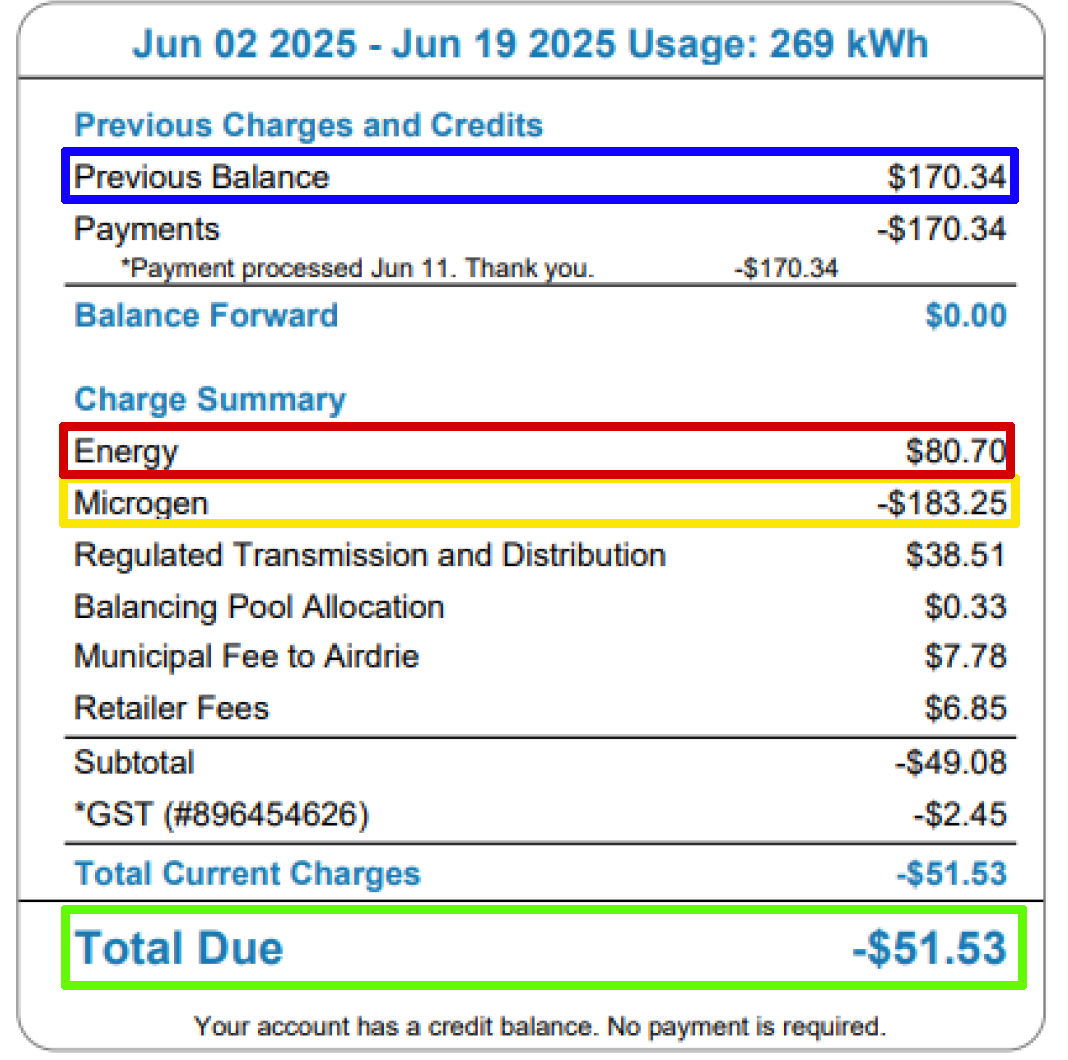
Your utility tracks how much energy you send to the grid each month. That amount is multiplied by your current retail rate and applied as a credit against your bill. If your credit exceeds your charges, the surplus rolls to the next month.

Annual True-Up

Credits accumulate for 12 months. At the end of your billing year, any remaining unused credit is forfeited. This makes it important to right-size your system so you're not over-generating by a wide margin year-round.

Rate Variability

Alberta uses a deregulated electricity market. Your retail rate floats with the market. Export credits are calculated at whatever your rate is in any given billing period, not locked to a fixed feed-in tariff.

System Size Limit

The Micro-Generation Regulation applies to systems up to 5 MW. For residential use, this is not a practical constraint. Most home installations are 6 to 12 kW, well within the micro-generation threshold.

Alberta Export Rates by Utility

The rate your credits are valued at depends on your electricity retailer. Most Albertans on regulated rate option (RRO) or a fixed-rate contract see the following approximate structure. Rates fluctuate monthly on RRO.

ComponentApproximate RangeNotes
Energy charge6 to 12 cents/kWhVaries with AESO pool price
Distribution charge3 to 5 cents/kWhVaries by wire owner (EPCOR, ENMAX, FortisAlberta)
Transmission charge~1.5 cents/kWhProvince-wide standard
Local access fee~1 cent/kWhMunicipal levy
Admin/rider fees~1 cent/kWhVaries by retailer
All-in effective rate~16 to 20 cents/kWhThis is what your export credit is worth

Source: AESO, EPCOR, ENMAX published rate schedules. Rates as of early 2026; subject to change.

Getting Connected: The Interconnection Process

1

System Design and Permits

Your installer submits permit drawings to your municipality (Edmonton, Calgary, or your city/county). Most Alberta municipalities issue solar permits within 1 to 3 weeks. Your installer handles this on your behalf.

2

Interconnection Application

Your installer applies to your wire owner (distribution utility) for interconnection. This is EPCOR in Edmonton, ENMAX in Calgary, and FortisAlberta in most rural and suburban areas. Approval typically takes 2 to 6 weeks.

3

Meter Upgrade

Your utility installs a bidirectional meter that tracks both how much energy you consume and how much you export. There is typically no cost to the homeowner for the meter upgrade in Alberta.

4

Installation and Inspection

Panels and inverter are installed. A provincial electrical inspector signs off on the work. Your installer coordinates this inspection.

5

Activation and Billing Start

Once approved, your system goes live and your utility starts tracking export credits on your next billing cycle. You'll see the credit line appear on your bill.

Client Case Study

8 kW System in Sherwood Park: Turning Summer Surplus into Winter Savings

The Situation

A homeowner in Sherwood Park with a 2,300 sq ft home was spending $2,400 per year on electricity. Their south-facing roof with minimal shading made them a strong candidate for solar. They were most concerned about whether the system would produce enough value in Alberta's shorter winter days.

Our Approach

We modeled an 8 kW system producing approximately 10,200 kWh annually. Summer months generate 1,200 to 1,400 kWh surplus that rolls forward as net billing credits. We demonstrated that by October, the credit bank covers most of the higher winter consumption months.

The Outcome

After installation, the homeowner's net annual electricity cost dropped from $2,400 to under $400, an $2,000+ annual saving. The 12-month credit cycle worked as modeled, with roughly $180 in summer surplus credits carried into December and January.

Client name changed. Results vary based on individual circumstances. Prior results do not guarantee similar outcomes.

Net Billing vs. the Solar Club: Which Is Better?

Some ENMAX customers in Calgary have access to the Solar Club rate program, which replaces the standard time-of-use billing with a high/low seasonal rate structure. For most Alberta homeowners outside Calgary, net billing under the standard micro-generation framework is the applicable program.

FeatureNet Billing (All Alberta)Solar Club (ENMAX only)
Who qualifiesAny Alberta grid-connected solar ownerENMAX customers in Calgary
Export credit rateRetail rate (~18 cents/kWh avg)High rate $0.30/kWh (summer); low $0.0877/kWh (winter)
Credit rollover12 monthsBilled monthly, no rollover pool
EnrollmentAutomatic on interconnectionMust opt-in with ENMAX

Frequently Asked Questions

Yes. If your battery discharges to the grid, that export is also credited at retail rate. However, most homeowners with battery storage prioritize keeping surplus in the battery for self-consumption rather than exporting. The net billing regulation doesn't distinguish between panel export and battery export.

They are forfeited. This is the most important design consideration when sizing an Alberta solar system. A system that generates a large annual surplus may be leaving money on the table. The goal is to size the system so annual production closely matches annual consumption, with modest summer surplus that draws down through winter.

Yes. EPCOR administers net billing for Edmonton customers under the provincial Micro-Generation Regulation. You don't need to do anything special beyond the standard interconnection application. EPCOR installs the bidirectional meter as part of the approval process, at no charge to you.

Yes, that's the core benefit of Alberta's net billing framework. Credits are valued at your retail rate, which includes energy, distribution, transmission, and local access fees. This distinguishes Alberta from jurisdictions that credit only the wholesale energy component, which would be significantly lower.

You don't need retailer approval, but your wire owner (EPCOR, ENMAX, or FortisAlberta) must approve your interconnection before you can go live. Your installer submits this application. The retailer will be notified automatically when your bidirectional meter is activated and will update your billing accordingly.

Stack Net Billing with Other Alberta Incentives

Net billing works alongside every other incentive available to Alberta solar owners. There is no requirement to choose between programs. A complete incentive stack for an Alberta homeowner might look like this:

  • CEIP financing (where available): 0% to 3.75% municipal loan up to $50,000 paid back through property taxes, removing the upfront capital barrier entirely.
  • Net billing credits: Retail-rate export credits offsetting 80% to 100% of annual electricity costs for a well-sized system.
  • Solar Club (ENMAX customers): High-rate summer export at $0.30/kWh for Calgary homeowners who opt in.
  • Federal ITC: 30% investment tax credit for commercial installations and eligible residential systems.

Learn more about the full picture on our Alberta solar incentives overview page.

Find Out What Net Billing Means for Your Bill

We model your home's production, export, and credit drawdown based on your actual usage and roof profile. Get a transparent solar proposal with real Alberta numbers.